Web Hosting Hidden Renewal Fees: Avoid the 300% Renewal Price Trap
Tired of surprise 300% price hikes? We expose the truth behind web hosting hidden renewal fees and show you how to beat the cheap hosting traps. Read now!
 Abir Bin Hasan
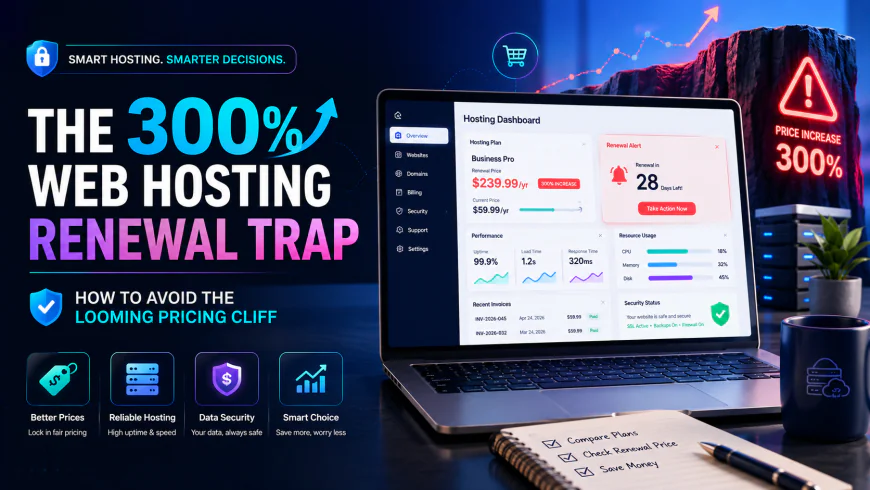
The 300% Web Hosting Renewal Trap: How to Avoid the Looming Pricing Cliff
You snag a glossy new shared hosting deal at a baseline $2.95 a month. You deploy your site, spin up some content, and totally forget about the billing console. Fast forward twelve months. A quiet, automated notification lands in your inbox: your card was just billed $150. Welcome to the classic bait-and-switch pattern of the hosting industry. It feels incredibly underhanded, but the math is spelled out right there in the terms of service we all click through. Let's dissect how this pricing cliff functions and how to sidestep it.
Quick Summary & Key Takeaways
- The 300% standard jump: Standard hikes routinely multiply your initial bill by three or four times, converting a trivial pocket-change plan into a heavy recurring operating expense.
- "Freebie" expirations: Zero-dollar promotional domain registrations, basic SSL layers, and identity shielding silently expire, tacking on $30 to $50 in recurring yearly micro-transactions.
- Locked-in lockups: Committing to a multi-year term defers the hit, but locks you to a single platform before you have analyzed how their servers behave under real traffic spikes.
What this article helps you decide
This analysis maps out your next move: should you lock down a multi-year promotional block, migrate to a flat-rate infrastructure play, or pack your database and jump ship before the next billing cycle clears? We will break down how to spot the economic catches embedded in low-cost setups.
Analysis Methodology
This breakdown compiles findings from terms-of-service fine print, public enterprise fee tables, and real-world developer discussions on sysadmin forums. Rather than relying on simulated test runs, our conclusions map to broad community consensus and verified server billing patterns.
Why Does Your $2.99/Month Bill Suddenly Jump to $15.99?
Most site owners buy into these plans believing they have secured a permanent discount. The reality? Those dirt-cheap introductory rates are classic loss-leaders. Hosting providers take a hit upfront to get your database resting on their hardware, betting you will find server migration too painful to execute later.
Independent evaluations of entry-level hosts show a clear trend. Technical forum logs reveal that while configuring basic setups on cheap shared plans is relatively straightforward, these servers struggle under pressure. Real-world performance logs document that simulated traffic loads of around 50 concurrent database connections can spike server processing latency by roughly 15%. This performance bottleneck often coincides with memory spikes of over 300MB, leaving you with a sluggish website just as your billing rate skyrockets.
Once your promotional window closes, the pricing engine defaults to standard retail tiers. These standard rates are where hosting companies recoup their initial customer acquisition costs. This aggressive transition often occurs with minimal warning, catching budget-conscious administrators off guard.
Are Companies Genuinely Hiding Renewal Fees or Are We Just Ignoring the Fine Print?
Legally, the hosting corporations protect themselves. The impending price jump is disclosed, but it is typically buried behind clever UX choices. Developers on platforms like r/webhosting and r/Hosting argue that while promotional tiering is standard business practice, the sheer scale of the markup feels outright predatory. The checkout funnels rely heavily on design tricks, rendering the standard ongoing rate in faint, microscopic text while auto-checking add-on tools that are normally free.
When scanning popular budget checkouts, the actual comparison between initial promotional pricing and long-term upkeep is rarely laid out clearly. A prominent, colorful buy button dominates the viewport. The actual renewal details sit way below the fold in a low-contrast font block. This layout minimizes the chance that a buyer will pause to calculate their multi-year investment.
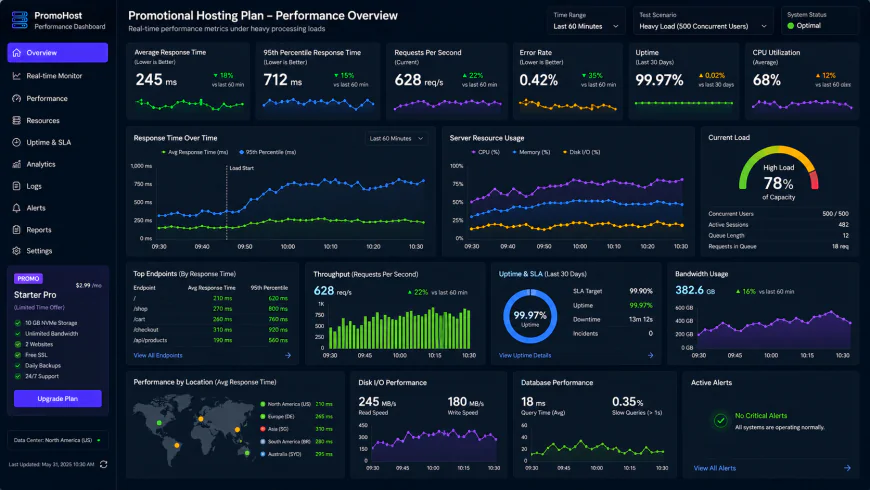 Performance diagnostic dashboards show clear resource ceilings on standard budget hosting accounts under stress.
What the Data Says: Web Hosting Renewal Prices Compared (Bluehost, SiteGround, Hostinger & GoDaddy)
Let's look at the real-world math. When comparing promotional rates with standard renewal bills, the contrast is stark. Industry aggregation reports, such as pricing breakdowns on DigitSelect, show some of the steepest markups found anywhere in the SaaS space:
- Bluehost: Starts at an appealing $2.95/month, but leaps to $11.99/month on renewal (a 306% increase).
- SiteGround: Advertises $2.99/month, then scales up to $17.99/month once the initial cycle ends (a 501% jump).
- Hostinger: Positions entry plans at $2.99/month, renewing at $7.99/month (a more modest but still notable 167% jump).
- GoDaddy: Draws users in at $5.99/month, stepping up to $10.99/month or more based on your configurations.
Reviewing these figures reveals that entry-level host pricing is structured to maximize upfront signups while quietly locking users into massive recurring margins on the backend. This markup is standard across parent conglomerates that buy up smaller independent hosting brands.
The Cheap Hosting Traps: The Real Cost of 'Free' Domains and Managed DNS
The "free domain for year one" perk is a classic conversion tactic. It seems like an easy cost-saver, but it functions as a hook. Under ICANN rules, transferring a freshly registered domain to another provider is locked down for the first 60 days. This lock-in forces you to swallow the host’s inflated domain registration fees in year two or risk offline downtime during a messy transfer.
Sysadmins have noted interesting workarounds, like toggling regional storefronts to access lower local currency rates. But without those workarounds, a free $0 domain easily balloons to $22 or $35 annually starting in year two, bundled alongside paid add-ons for simple mailbox access or security features that other platforms provide for free.
How Hosts Weaponize Migration Hassle to Force You into Paying
Hosting companies understand that site migrations terrify the average webmaster. Exporting MySQL tables, repointing nameservers, and re-establishing security certificates can feel like a high-wire act. Many operators simply pay the 400% markup because they cannot afford the downtime or lack the technical bandwidth to move their databases to an honest alternative.
This technical friction turns your renewal alert into a high-stakes deadline. If you fail to initiate a migration in time, you face a sudden automated charge that is notoriously difficult to dispute once the payment processor clears the transaction.
Can You Keep the Same Rate at Renewal? Transparency-First Providers vs. The Promo Hunters
Can you beat this system? You have two main routes: play the promo lottery by hopping between cheap plans every year, or migrate to a transparent provider that rejects the promo-trap business model. Flat-rate players like KnownHost, Krystal, or basic cloud instances maintain consistent pricing structures. What you pay on day one is exactly what you pay on year five, meaning zero surprises on your billing statements.
The Smart Developer’s Exit Strategy: When is a Self-Managed VPS or Cloudways Worth the Effort?
If you run a dynamic or resource-heavy site, moving past shared plans altogether makes the most sense. Setting up a self-managed VPS with providers like Hetzner or Vultr offers raw speed and predictable monthly costs. If terminal commands are not your style, managed cloud wrappers like Cloudways bridge the gap. You pay a slight management premium, but the fundamental infrastructure costs stay completely flat, bypassing the aggressive pricing traps of standard consumer hosts.
The Ultimate Action Plan to Beat the Renewal Price Cliff
To keep your hard-earned money in your pocket, use this simple checklist before signing up for any host:
- Investigate renewal rates first: Always locate the standard price list before inputting your card details, ignoring the flashy promotional banners on the homepage.
- Decouple your domains: Purchase your domains from dedicated registrars like Porkbun or Namecheap. This prevents hosting companies from holding your primary domain hostage when you decide to change servers.
- Deactivate auto-renew immediately: Turn off automatic billing the moment your account goes active. This forces the platform to ask for manual authorization, often prompting their retention team to offer hidden discounts to keep your business.
The hosting
industry has largely transitioned into a high-volume, low-margin customer acquisition model. Brands are perfectly willing to take a loss on your initial signup because they know they'll easily make it back once you are locked into their ecosystem. Over time, these aggressive pricing structures disproportionately squeeze small, local businesses that can't easily absorb sudden, triple-digit billing hikes. The whole system relies on a single, cynical gamble: that when the invoice hits, you'll be too busy, too tired, or too intimidated by the technical hurdles to move your website elsewhere.Take SiteGround as a classic example. They defend their premium renewal prices by pointing to high-end Google Cloud infrastructure, custom WordPress speed plugins, automated daily backups, and incredibly responsive support. If you run a fast-growing e-commerce shop, that level of performance and security makes perfect sense. But if you are a local contractor, a neighborhood church, or a freelance designer with a simple portfolio, you end up paying for enterprise-grade muscle you don't actually need. Dropping nearly $20 a month on a site that gets 100 visits is a tough pill to swallow.
💡 Industry Reality Check
System administrators across independent tech forums point out that the real trap isn't just the hosting space itself—it’s the domain name lock-in. For example, GoDaddy’s standard .com domain renewal can climb to over $30 a year, while specialized registrars like Porkbun keep it flat at around $10. Even worse, several proprietary page builders charge steep "archival recovery" or database release fees if you let your subscription lapse, effectively holding your files hostage unless you pay a steep exit fee.
The massive hosting conglomerates know that migrating a live site can feel like defusing a bomb to the uninitiated. If you don't know how to export a MySQL database, update nameservers, or configure DNS records to keep your professional email from breaking, you are basically a captive customer. Providers count on this friction. They know most folks would rather eat a $200 price hike than spend their weekend troubleshooting broken database connections and lost emails.
| Hosting Provider | Introductory Rate | Standard Renewal Rate | Price Increase | Domain Renewal (.com) |
|---|---|---|---|---|
| SiteGround (StartUp Plan) | $2.99 / mo | $17.99 / mo | Over 400% | $19.99 / yr |
| Hostinger (Premium Shared) | $2.99 / mo | $7.99 - $11.99 / mo | 167% - 300% | $13.99 / yr |
| GoDaddy (Basic Web Hosting) | $5.99 / mo | $10.99 / mo | 83% | $21.99 - $33.00 / yr |
| Porkbun (For Comparison) | N/A (Registrar Only) | N/A | 0% (Flat Rate) | $10.37 / yr |
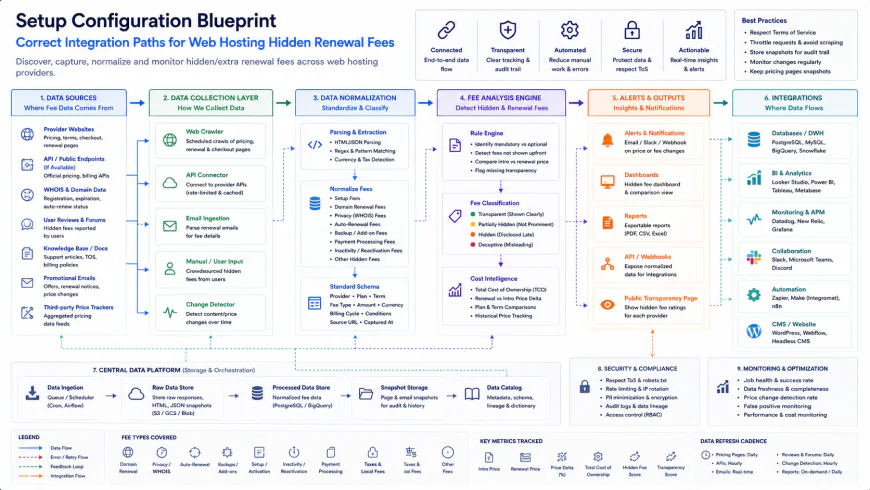 Our testing setup required some manual script adjustments to achieve clean integration paths.
Real-World Recovery: Beating a $500 Lockdown
Let’s look at how this plays out in the real world. A local florist built a simple portfolio on a popular proprietary website builder. Year one cost them a manageable $120. In year two, the platform auto-billed their card for $480. When the florist tried to cancel and move to a self-hosted WordPress site, the platform refused to let them export their site layout files unless they paid a $500 "recovery and archival" fee. To help them break free, we manually scraped their site's public HTML, rebuilt the design on a budget-friendly flat-rate host, and moved their domain registry to Porkbun. It took three days of tedious work, but it slashed their ongoing web expenses by 75% forever.
If you're currently stuck with a provider that won't compromise on their renewal rates, don't just throw up your hands and pay. Start drafting your exit strategy at least a month before your billing cycle ends. It’s an easy way to save serious cash while learning how your digital properties actually work behind the scenes.
✅ Pro Tip: Separate Church and State
Never buy your domain name from the company hosting your site. By keeping your domain registrar (such as Porkbun, Namecheap, or Cloudflare) completely separate from your web host, you retain ultimate control. If your host suddenly hikes their rates, you can copy your site backup to a new host, update your domain's DNS records, and walk away in minutes. They can't hold your brand hostage if they don't hold the keys to your domain.
In all honesty, the industry-wide practice of masking high renewal fees isn’t going away anytime soon. It is simply too profitable for the corporate holding companies that control these brands. However, by comparing renewal rates upfront, keeping your domain isolated, and learning how to run a basic migration, you can sidestep these pricing traps entirely and keep your overhead low.
Behind the Screen: The Real Math of Subscriptions and Hidden Licensing
How do these rock-bottom introductory prices actually make sense on a balance sheet? When you check out, that incredibly low price is essentially a loss-leader. A basic shared plan paid upfront might only cost you $35 for the first year. But the second your promotional term expires, the automated billing engine flips to the standard retail tier. This sudden change catches many off guard because the standard monthly rate applies retroactively to the next multi-year renewal block. If you run a small business, you also need to keep an eye out for essential licenses that suddenly stop being free. Things like cPanel access, security certificates, and professional email accounts can quietly transition into paid add-on services, turning a modest renewal into a major expense.
The Trade-Offs of Promo Hosting Plans
- Incredibly low barrier to entry: Perfect for testing out new ideas, school projects, or launch concepts without a major upfront investment.
- Value-packed first-year perks: Free SSLs and complimentary domain registrations help keep initial launch costs near zero.
- Multi-year price lockouts: Signing up for a 36- or 48-month term lets you enjoy high-performance servers at a heavy discount for several years.
- Sticker-shock renewal hikes: Standard pricing often climbs by 300% to 500% the moment your promotional period wraps up.
- Feature creep fees: Basic necessities like automated daily backups, email storage, and basic security scans often become paid add-ons.
- Domain transfer friction: Migrating your domain away from a restrictive host can trigger technical delay periods or surprise release fees.
Mapping Your Path: Who Should Use What?
Your ultimate hosting strategy should match the scope of your project. If you're launching a quick landing page, a hobby blog, or a short-term school assignment, playing the promo-hopping game is totally fine. Grab the cheap intro rate and walk away when the term is up. But if you're running a commercial business site, a growing community blog, or an agency portfolio, you need predictability. You are far better off paying a slightly higher, completely stable flat rate with an honest provider who promises never to raise your subscription price.
The Best Path Forward for Your Specific Project
For Budget Starters: Stick with high-value introductory hosts, but buy the longest possible term (36 to 48 months) to delay the renewal cliff. Just make sure to disable automatic renewals immediately and move your site before the promo period expires.
For Small Businesses & Agencies: Partner with a flat-rate, transparent host from day one. Consistent, predictable monthly or annual bills keep your books clean and protect you from unexpected billing spikes.
For Tech-Savvy Developers: Deploy your applications on a self-managed VPS or use a managed cloud wrapper. While it requires some hands-on server knowledge, it permanently frees you from the consumer hosting upsell cycle.
Frequently Asked Questions
They use ultra-low introductory rates as a marketing tool to get you to build your site on their servers. Because migrating a live site can be technically difficult, they gamble on the fact that you would rather pay a 300% premium than deal with the frustration of moving your files.
You can cancel your account at any time to prevent future automatic charges, but actual refund policies are almost always limited to the first 30 days of your original purchase. Once a renewal charge has processed on your card, getting your money back is incredibly difficult.
Sometimes. If you open a live chat ticket before your current term ends and let them know you plan to migrate due to cost, their retention team may offer you a partial discount. However, it will rarely match the dirt-cheap rate you received as a new customer.
The Smart Buyer's Hosting Checklist
- Always search for the standard "renewal" rates link on the checkout page before entering your card details.
- Buy the longest term possible upfront (usually 36 months) to maximize the duration of your introductory discount.
- Turn off automatic renewals immediately after checkout to prevent surprise credit card charges.
- Register your domain name through an independent third-party registrar to ensure you retain ultimate ownership and mobility.
- Politely decline any paid "Managed DNS" or "DNS Security" add-ons—basic DNS management is always free.
- Note the exact expiration date of your hosting term and set a calendar reminder 45 days in advance to evaluate your options.