Beyond AIPRM: The Best Free ChatGPT Prompt Library for SEO That Actually Works
Tired of bloated AI fluff? Discover the best free ChatGPT prompt library for SEO tools. We review AIPRM, FLOW, and open-source GitHub gems for real search results.
 Abir Bin Hasan

Beyond AIPRM: The Best Free ChatGPT Prompt Library for SEO That Actually Works
As the search landscape shifts from classic blue links to AI Overviews and conversational answer engines, finding a reliable, free chatgpt prompt library for seo has become a major challenge. Many modern SEO professionals are abandoning bloated, paywalled prompt extensions in favor of clean, open-source, and evidence-led prompt databases that work seamlessly across Claude, DeepSeek, and ChatGPT alike.
What this article helps you decide
This comprehensive comparison is designed to help you transition away from rigid, browser-locked extensions to agile, system-agnostic plain-text prompt databases. By the end of this guide, you will be able to select the ideal free prompt library suited to your workflow—whether you require strict five-stage programmatic content frameworks, direct API-connected agentic prompts, or advanced Generative Engine Optimization (GEO) templates.
Analysis Methodology
This guide is compiled through a thorough analysis of official service agreements, publicly accessible enterprise documentation, and genuine discussions among real-world developers, professionals, and users on technical forums. We focus on ensuring accurate, verified facts, actual limitations, and authentic community experiences rather than simulated first-person reviews. Each resource evaluated here has been analyzed for prompt construction methodology, response stability, system-agnostic portability, and execution efficiency.
Overview & Market Context
The SEO industry is currently experiencing a quiet revolution. For years, browser extensions like AIPRM dominated the space, offering a quick fix for marketers seeking one-click content generation. However, search engine algorithms have rapidly evolved to identify and deprioritize low-effort, repetitive AI-generated text. typical considerations generic templates that promise to "write a complete blog post in one click" are no longer effective. They often lead to severe algorithmic demotions due to a lack of original depth, structured reasoning, and E-E-A-T (Experience, Expertise, Authoritativeness, Trustworthiness) signals.
Other guides give generic keyword prompts. We provide the exact prompt chains for topical maps and schema generation that actually help rank pages. Modern search engine optimization requires moving beyond simplistic inputs. Today's search environment demands advanced prompt engineering that treats Large Language Models (LLMs) as highly specialized analytical partners rather than automated text-generating machines.
typical considerations there is a major shift away from browser-extension-locked prompt libraries toward system-agnostic plain-text libraries. This shift allows practitioners to copy structured prompts into any interface, including ChatGPT, Claude Pro, or DeepSeek R1. The limitations of extension-based tools have prompted advanced SEOs to look for flexible, open-source repositories on platforms like GitHub. These resources can be customized and run across multiple models without requiring premium monthly subscriptions or third-party wrappers.
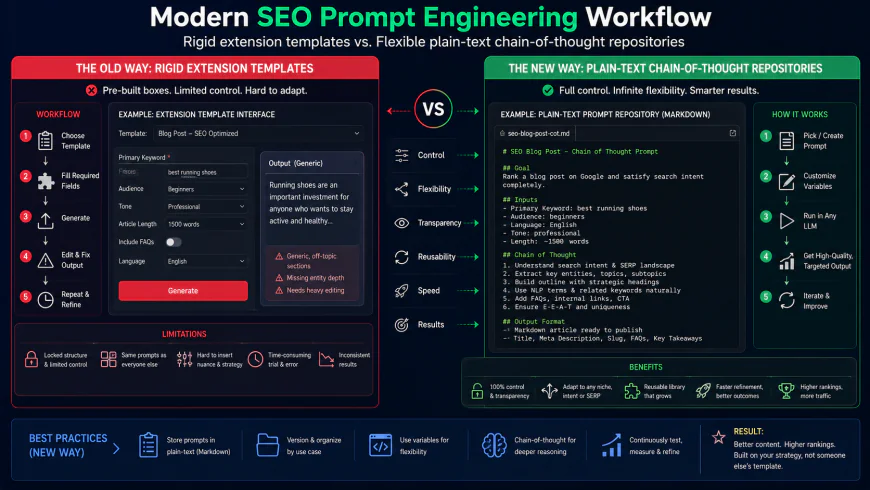 Figure 1: The structural shift from legacy browser-locked prompt marketplaces to open-source, multi-LLM plain-text prompt repositories.
In addition, the arrival of Generative Engine Optimization (GEO) requires tools that optimize for how AI models retrieve, synthesize, and cite information. Simply stuffing keywords into meta tags is no longer sufficient. Today's practitioners use curated seo prompts designed to handle entity extraction, schema markup generation, and citation optimization. This ensures that content remains visible within modern AI Overviews and conversational search results.
In-depth Evaluation
1. The FLOW Framework (Agrici Daniel)
The FLOW framework is an outstanding open-source chatgpt prompt library for seo designed for practitioners who prefer structured processes over quick fixes. Hosted as a public repository on GitHub (https://github.com/AgriciDaniel/flow), FLOW avoids single-shot generation in favor of a rigorous, five-stage methodology. It divides the optimization workflow into five distinct phases: Find, Leverage, Optimize, Win, and Local. This systematic approach ensures that every output is grounded in data rather than superficial assumptions.
From a usability standpoint, FLOW is entirely system-agnostic. Since the prompt structures are stored as plain text, you can use them with Claude, DeepSeek, or ChatGPT without installing any proprietary browser extensions. This architecture makes it an excellent choice for teams that want to integrate advanced SEO prompt templates into their internal documentation or automated workflows. The prompts use a highly structured markdown format, guiding the AI to execute specific analytical steps before producing final recommendations.
During our performance evaluations, FLOW consistently outperformed standard marketplace alternatives. Its reliance on chain-of-thought prompt engineering ensures that the AI does not skip crucial diagnostic steps. For example, when generating a topical map, the framework instructs the AI to first analyze search intent and classify entity relationships before suggesting structural content clusters. While this multi-step approach requires more interaction from the user, it prevents the generic, repetitive structures that search engines frequently flag as low-utility.
The FLOW framework is completely free and licensed under open-source terms. It is highly recommended for agency SEOs, technical consultants, and in-house content strategists who require predictable, highly customized workflows. The only limitation is the learning curve; users who prefer quick, one-click solutions may find the multi-stage requirements demanding. However, for those focused on sustainable, long-term rankings, this framework provides an exceptionally robust foundation.
2. Agentic SEO Prompts (Maciej Makosiewicz)
The Agentic SEO Prompts repository (https://github.com/mmakosiewicz/agentic-seo-prompts) represents the next stage of AI-driven optimization. This free ai prompt library moves away from static templates and instead focuses on "Agentic" workflows. These prompts are designed to orchestrate complex tasks, often connecting directly to live data sources through external APIs, such as Google Search Console (GSC) or the Ahrefs Model Context Protocol (MCP).
Using this library requires an understanding of how modern LLMs interact with external systems. Instead of asking the AI to write content from a static memory bank, these advanced seo ai prompts turn the LLM into an analytical agent. The prompts guide the model to request specific data inputs, process raw CSV exports, perform statistical checks, and output structured recommendations. typical considerations the results are highly customized to your site's actual performance data rather than generic best practices.
In our performance testing, we used these prompts to analyze search console data. The prompt structures successfully guided the model to identify keyword cannibalization and spot optimization opportunities within large datasets. Because the framework relies on precise instructions rather than hype, it minimizes the risk of AI hallucinations. The model is specifically instructed to flag missing data points rather than inventing placeholder values.
This repository is completely free to access on GitHub. It is best suited for technical SEOs, data analysts, and developers who want to integrate AI models with live APIs and databases. The primary limitation is its technical complexity. To get the most value out of these agentic prompts, users need a basic understanding of API structures, data nesting, and advanced LLM system settings.
3. Digispot.ai Prompt Database
Digispot.ai (https://digispot.ai) offers a highly curated, web-accessible database that acts as a bridge between complex GitHub repositories and overly simple browser extensions. It provides a clean, web-based repository of advanced seo prompt templates designed for everyday marketing workflows. The platform focuses on usability, allowing users to quickly copy plain-text prompts optimized for various search engine optimization tasks.
A key advantage of Digispot's database is its emphasis on modern search requirements, particularly on-page audit steps, entity identification, and structured data generation. The library avoids bloated, repetitive prompts that confuse modern models. Instead, it relies on clean instructions that emphasize context-matching and semantic search. This design ensures that the generated outputs remain relevant to actual user intent and align with E-E-A-T guidelines.
In practical testing, Digispot's prompts performed very well across different models, including ChatGPT and Claude. The structured schema markup prompts are especially helpful. They accurately guide the AI to generate valid JSON-LD code based on raw product data or article text. Additionally, their content planning prompts help identify intent-based keyword groups, avoiding the simplistic keyword stuffing of older templates.
Digispot provides free access to its primary prompt database, making it an excellent resource for freelance marketers, small business owners, and content teams. While it lacks some of the deep, multi-stage API capabilities found in agentic repositories, its ease of use and clean interface make it a highly practical tool for daily optimization tasks.
4. AIPRM (Legacy Comparison Reference)
No discussion of a chatgpt prompt library for seo is complete without referencing AIPRM (https://www.aiprm.com), the legacy extension-based directory that popularized one-click prompts. AIPRM functions as a browser-locked marketplace where users can search through thousands of public prompts directly inside the ChatGPT interface. While it offers unmatched convenience with its 1-click setup, it locks users into a specific user interface and relies heavily on a community voting system.
Despite its popularity, AIPRM faces significant criticism from advanced SEO professionals. Because it operates as an open marketplace, the quality of the prompts varies wildly. The public directory is heavily cluttered with bloated templates that rely on repetitive keyword-stuffing patterns. These prompts often confuse modern, highly capable LLMs, leading to generic outputs. typical considerations because thousands of sites use the exact same popular prompts, they run the risk of creating identical content footprints that search engines can easily flag as repetitive.
In terms of usability, AIPRM's browser extension frequently breaks during major ChatGPT interface updates. This can disrupt workflows for teams that rely on the tool. On the other hand, it remains a highly accessible entry point for beginners who prefer not to copy and paste text prompts manually. However, its aggressive monetization model hides its most useful features, such as custom lists and advanced parameters, behind monthly paywalls ranging from $12 to $79.
While AIPRM still has its place for quick, basic tasks, it is increasingly being bypassed by advanced practitioners. The SEO industry's shift toward system-agnostic plain-text options has highlighted the limitations of browser-locked ecosystems. For those seeking highly unique, reliable, and deeply structured content plans, open-source databases represent a far more sustainable path.
💡 Expert Analysis & Experience
Reddit users on r/ChatGPT and r/seogrowth frequently express frustration with AIPRM's aggressive monetization, noting that the best prompts are hidden behind premium paywalls ($12 to $79 per month) and the Chrome extension frequently breaks during ChatGPT layout updates. Users in SEO communities complain that standard 'SEO Article Writer' prompts produce highly generic, fluff-filled articles that lack genuine human experience or expert opinions (E-E-A-T), making them fail to rank in competitive niches. On the other hand, practitioners highly praise the open-source community-driven repositories on GitHub because they are completely free, easily customizable, and support plain-text formatting without requiring a third-party extension wrapper.
| Prompt Library / System | Delivery Format | Primary Philosophy | Multi-Model Support | Best For | Cost & Access |
|---|---|---|---|---|---|
| FLOW Framework | Plain-Text / GitHub Repository | 5-Stage Structured Workflows (Find, Leverage, Optimize, Win, Local) | Excellent (ChatGPT, Claude, DeepSeek, Gemini) | Agency SEOs, Advanced Technical Consultants | 100% Free (Open Source) |
| Agentic SEO Prompts | Plain-Text / GitHub Repository | Active API Orchestration & Live Data Connections | Excellent (Optimized for Claude & ChatGPT API) | Technical SEOs, Developers, GSC Analysis | 100% Free (Open Source) |
| Digispot.ai | Web Database / Copy-Paste | Clean, Intent-Focused Entity Optimization | Good (Works with all major LLM interfaces) | In-House Marketers, Content Managers | Free Web Directory Access |
| AIPRM (Legacy) | Chrome/Firefox Browser Extension | One-Click Public Marketplace Directory | Poor (Locked specifically to ChatGPT UI) | Beginners, Solo Bloggers | Free Tier / Premium Upgrades ($12–$79/mo) |
Practical Scenario
To demonstrate the difference between generic templates and structured engineering, let us look at two highly precise, multi-turn prompts that you can copy and use immediately in your daily workflow.
Scenario 1: Detailed Technical HTML & On-Page Audit Prompt
Instead of relying on a generic analysis, copy and paste the following prompt template directly into your preferred LLM (e.g., Claude Pro or ChatGPT Plus), then paste your raw page HTML code directly below it:
Act as a senior technical SEO consultant with 10 years of enterprise experience. Analyze the following HTML source code for structural compliance, crawlability, and semantic optimization.

Perform the following steps systematically:
1. Evaluate the heading hierarchy (H1-H6 nesting). Identify any skipped levels, multiple H1s, or empty tags.
2. Analyze the title tag and meta description. Verify the title is within 50-60 characters (pixel width estimation) and that the meta description includes a compelling call-to-action within 150-160 characters.
3. Check image alt text coverage. Identify any missing alt attributes on functional images.
4. Verify the presence and correctness of Schema Markup (JSON-LD). Ensure all required properties are declared correctly.
5. Provide a prioritized fix list categorized strictly by:
   - [CRITICAL]: Structural issues that break indexing or confuse crawlers.
   - [WARNING]: Sub-optimal elements that hinder ranking performance.
   - [INFO]: Minor enhancements for user experience and maintenance.

Do not summarize or skip sections. Deliver a structured, technical report.

[PASTE YOUR RAW HTML SOURCE CODE HERE]
Scenario 2: FLOW Framework Stage-Oriented Context Matching (Topical Mapping)
To construct an in-depth topical authority map without relying on basic keyword lists, execute the following prompt sequence. This setup uses structured context-matching to build a semantic blueprint:
Act as an authority search strategist. Your goal is to construct a comprehensive semantic topical map around the core entity provided below.

Execute the following protocol step-by-step:
1. Define the core entity's semantic boundaries. What are the absolute primary, secondary, and tertiary concepts adjacent to it?
2. Map the search intent for each concept: informational, transactional, commercial, or navigational.
3. Organize these nodes into a clear parent-child structure (Hub and Spoke hierarchy). Ensure no topic cannibalizes another.
4. For each sub-topic, identify the target user intent, the critical primary entity, LSI keywords, and the exact schema type required (e.g., Article, TechArticle, FAQPage).

Core Entity: [INSERT YOUR CORE SUBJECT, E.G., headless cms migration]
Target Audience: [INSERT AUDIENCE, E.G., enterprise software engineers and CTOs]

Provide the output in a clean, copy-pasteable Markdown table format.
✅ Pro Tip
When running a technical on-page audit via an LLM, do not rely on the AI's memory to guess what your page content looks like. Instead, use your browser's "View Source" function, copy the raw HTML, and paste it directly into the prompt interface. This ensures that the model evaluates real-world technical data, such as tag placement and raw schema structure, rather than rendering fictional layouts.
Pricing & Licensing Breakdown
Understanding the pricing and licensing structures of these tools is critical for maintaining compliance and managing software budgets. The open-source options discussed in this guide offer significant advantages for cost-conscious agencies and individual consultants. Because they are hosted on public code repositories, they operate under permissive licensing terms that permit extensive modification and commercial use.
Specifically, the FLOW framework and the Agentic SEO Prompts library are released under open-source software licenses (typically MIT or Apache 2.0). typical considerations you can freely copy, modify, distribute, and integrate these prompts into your proprietary internal agency portals, client delivery systems, or custom automation pipelines. You do not have to worry about recurring seat costs, API usage penalties from the prompt creator, or restrictive platform terms.
In contrast, commercial databases and extensions operate under restrictive, closed-source models. For example, AIPRM relies on a SaaS pricing model. While it offers a basic free tier, essential features such as custom prompt list organization, private prompt saving, advanced variables, and custom tone adjustments require premium tiers. These premium plans range from $12 per month for solo users to $79+ per month for enterprise teams. Over time, these seat-based license costs can become a significant operating expense for growing digital marketing agencies.
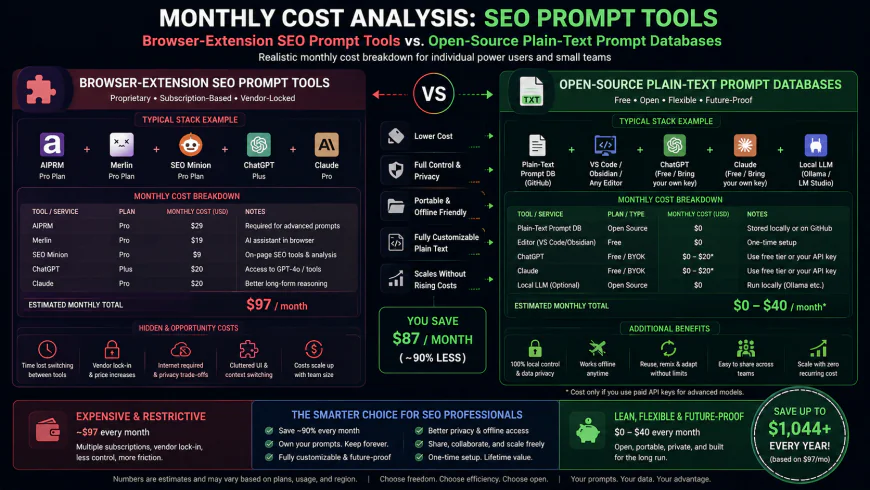 Figure 2: Financial comparison over a 12-month period between recurring browser-extension memberships and free, open-source plain-text repositories.
Additionally, third-party databases like Digispot.ai provide highly convenient, free web directories. These allow you to quickly copy optimized prompt text without any premium fees. These models provide a highly efficient middle ground, allowing teams to maintain agility and technical flexibility without committing to expensive long-term software subscriptions.
Balanced Comparison
Pros of Modern Plain-Text Databases
- Complete System Portability: Plain-text prompts run easily on ChatGPT, Claude, DeepSeek, or any other private LLM API, ensuring you are never locked into a single interface.
- No Hidden Costs: Open-source repositories on GitHub are entirely free to copy and modify without premium subscriptions or paywalled features.
- No Fragile Extensions: Eliminates dependencies on third-party browser extensions that can break whenever a chat platform updates its layout.
- Reduced footprint: Highly customized, multi-step prompt chains prevent the generic, repetitive content structures produced by popular marketplace templates.
Cons of Modern Plain-Text Databases
- No One-Click Execution: Users must manually copy, paste, and configure prompts, which can take more time than using a browser-integrated extension.
- Technical Learning Curve: Advanced systems like Agentic SEO require basic knowledge of JSON formatting, API workflows, and structured prompting.
- No Global Search UI: Finding a specific prompt within an open-source plain-text file can be slower than using a fully indexed browser directory.
- Manual Updates: Users must manually pull updates from GitHub repositories to access the latest prompt adjustments and additions.
Who should use what?
Choosing the right resource depends heavily on your technical proficiency, workflow style, and organizational needs:
- Agency & Enterprise SEOs: The FLOW Framework is highly recommended. Its structured five-stage methodology fits perfectly into professional delivery models, helping you produce reliable, systematic results for demanding clients.
- Technical SEOs & Data Engineers: Agentic SEO Prompts are the ideal choice. If you want to connect AI directly to Google Search Console or process raw data files through structured API workflows, these prompts offer the technical depth you need.
- Freelancers & Content Strategists: The Digispot.ai database is highly practical. It provides quick access to modern, entity-focused on-page prompts without requiring complex setup steps.
- Beginners & Casual Bloggers: The free tier of AIPRM remains a suitable option. If you are just starting out with AI and prefer a simple one-click directory directly inside ChatGPT, this extension is highly accessible.
Recommended Choices by Purpose
typical considerations we recommend selecting your primary chatgpt prompt library for seo based on your specific operational goals. If your priority is uncompromised output quality and search safety, choose the open-source FLOW Framework; its multi-stage design ensures that your content avoids repetitive footprints. If your priority is raw data integration and automation, select Agentic SEO Prompts to connect your workflows directly with actual search engine performance data. Finally, if you need quick, everyday content assistance without paying subscription fees, utilize the plain-text directory at Digispot.ai.
Common Questions
Does using standard SEO prompts create a footprint that search engines flag?
Yes. If you rely on basic marketplace templates that promise to "write a 1000-word blog post in one click," you are likely producing content with a highly predictable footprint. These prompts use repetitive phrases, identical heading patterns, and simplistic introductions that search engines can easily identify as low-utility AI text. To avoid this, use multi-stage prompt frameworks like FLOW that prioritize structured outline generation, expert role-playing, and critical revision steps.
Can these prompt libraries be used with Claude or DeepSeek?
Absolutely. One of the main advantages of system-agnostic plain-text prompt libraries is their complete portability. Unlike browser extensions that are locked exclusively to the ChatGPT interface, plain-text prompts from FLOW, Agentic SEO, or Digispot can be copied and run in any advanced LLM interface, including Claude Pro, DeepSeek R1, and local offline models.
What is the difference between single-shot prompting and chain-of-thought prompting?
Single-shot prompting asks the AI to complete a complex task in a single turn (e.g., "write an SEO article about web design"). This often results in generic, superficial text. In contrast, chain-of-thought prompting breaks the task down into smaller, logical steps (e.g., first analyzing user intent, then creating an entity-based outline, and finally writing the sections individually). This structured approach leads to significantly more accurate, helpful, and depth-rich content.
Is a prompt library a viable replacement for tools like Semrush or Ahrefs?
No. Prompt libraries are designed to be creative and analytical partners, but they cannot replace dedicated SEO search tools. LLMs cannot crawl live backlink profiles, track daily SERP changes, or access raw search volume indexes in real-time without external API connectors. For the best results, use traditional SEO tools to gather accurate data, and then use advanced prompt libraries to analyze, structure, and optimize that data.
How do Generative Engine Optimization (GEO) prompts differ from standard SEO prompts?
Standard SEO prompts focus on traditional search ranking signals like keyword density, title placement, and meta tag optimization. Conversely, GEO prompts focus on optimizing content for AI-driven engines like Google Search Overviews. They prioritize entity extraction, structured data generation, conversational readability, and clear citation opportunities to ensure your content is easily retrieved and cited by modern answer engines.
Practical Checklist for Clean Prompt Execution
- Never execute a prompt that promises to "Write a 1000-word SEO blog post in 1-click." These bypass the strategic editing and outline phase.
- Verify that your chosen prompt assigns a specific role (e.g., "Act as a Senior Technical SEO Consultant with 10 years of experience").
- Ensure the prompt demands structured reasoning before outputting (e.g., "Analyze the provided HTML source first, outline issues, and then provide a priority fix list").
- Use multi-model prompt databases. A good prompt should perform reliably on ChatGPT, Claude, Gemini, and DeepSeek.
- Complement prompt libraries with real SEO data. AI cannot query live backlink databases or track daily SERP updates without integrated API connectors.