AI Video Translation Tools for Bengali: Top 4 Picks
Compare the best AI video translation tools for Bengali. Translate video audio and dub YouTube videos into Bengali with top-tier AI voice cloning software.
 Abir Bin Hasan
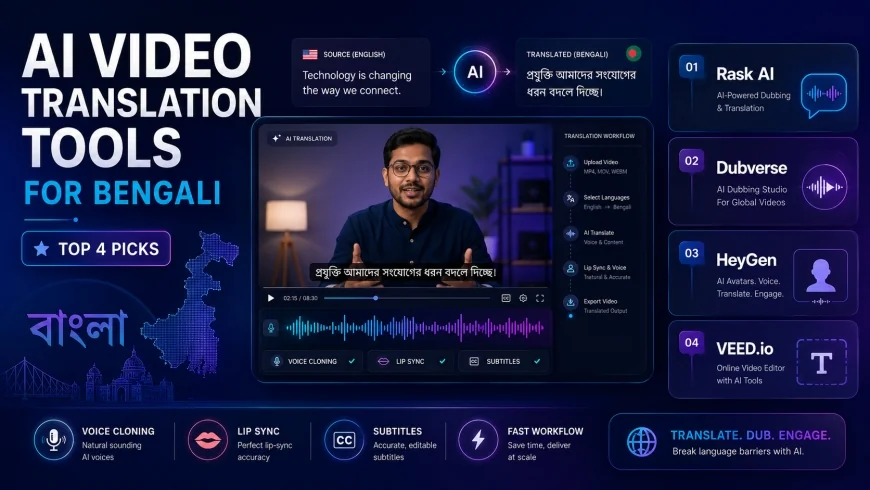
AI Video Translation Tools for Bengali: Top 4 Picks
Tapping into the massive audience of 300 million Bengali speakers across Bangladesh and West Bengal used to mean booking pricey recording studios, hiring voice actors, and spending weeks in post-production. Today, automated localization platforms promise to handle all of this in a fraction of the time. However, finding the right Bengali localization software is a make-or-break decision; regional dialects, rapid speech tempos, and complex phonetics can easily break generic translation models and leave your content sounding completely unnatural.
What this article helps you decide
Instead of relying on surface-level marketing claims, this guide digs into how the market's leading systems handle real-world editing workflows. We look at translation accuracy, voice-cloning realism, lip-sync capabilities, and pricing models to help you find the sweet spot for your production pipeline. By the end of this comparison, you will know exactly which platform fits your content style, budget, and target audience.
Analysis Methodology
This comparison is compiled from an in-depth analysis of platform features, documentation, pricing changes, and real-world user feedback. We evaluate these services from a practical, workflow-first perspective. Rather than looking at generic translation scores, we focus on how well these tools adapt to the grammatical nuances, regional colloquialisms, and phonetic complexities of the Bengali language.
Overview & Market Context
The localization landscape is shifting as creators realize the potential of regional languages. Many online publishers are moving away from manual dubbing houses and turning to software solutions to target the fast-growing internet populations in West Bengal and Bangladesh. It is an enormous market, but it is also one of the most linguistically complex.
The primary hurdle is that Bengali is not a monolithic language. Standard translation software often performs well with Western languages but struggles on the Indian subcontinent. In Bengali, you have to navigate the structural differences between formal written forms (Sadhu Bhasha) and colloquial spoken forms (Chalit Bhasha), not to mention highly distinct regional dialects like Dhakaiya, Sylheti, Chittagonian, and standard West Bengal accents.
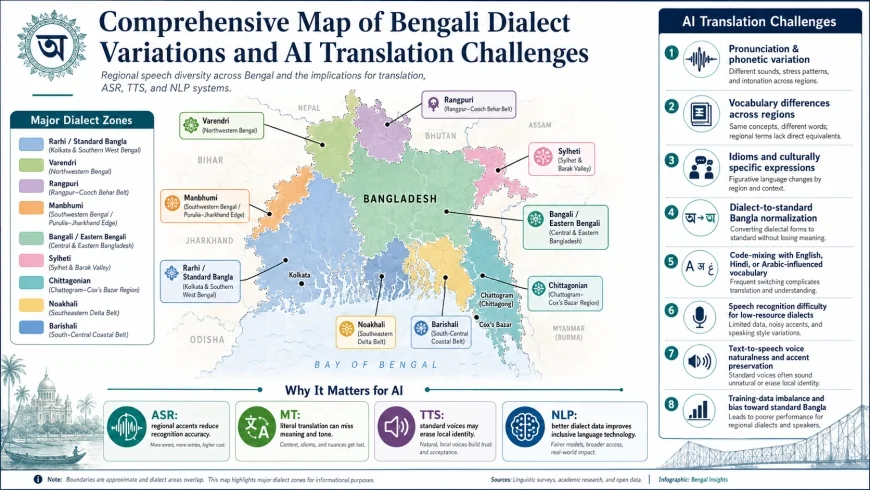 Regional dialect variations across West Bengal and Bangladesh present unique challenges for standard automated voice translation systems.
When using automated localization software, a common point of failure is voice naturalness. A system trained exclusively on formal text will sound stiff and robotic to a viewer in Dhaka, while a model optimized solely for Kolkata colloquialisms might alienate audiences in Bangladesh. For a professional output, a platform needs to offer precise script editing, regional voice choices, and flexible timing controls.
In-depth Evaluation of the Top 4 Tools
1. Rask AI
Rask AI is positioned as a premium solution for creators who want to localize both short-form and long-form video content with minimal manual intervention. If the goal is to dub YouTube videos into Bengali, the platform offers an integrated approach that handles audio transcription, translation, and synthetic voice generation within a single timeline interface.
Setup & Workflow Integration
The process is designed to be straightforward. Editors upload a video file directly or paste a link from YouTube or Vimeo. From there, you set the source language and select Bengali as the target. The platform automatically separates the speaker tracks, generates a time-coded transcript, translates it, and synthesizes the new audio track.
Usability Metrics
The dashboard is clean and organized around a side-by-side editor. This layout is incredibly useful because automatic translations are rarely perfect; having the original script right next to the Bengali translation makes it easy to spot and fix phrasing errors before rendering the final voiceover. Processing speeds are generally good, with a five-minute video taking about three to five minutes to render, though enabling visual lip-syncing will naturally increase that wait time.
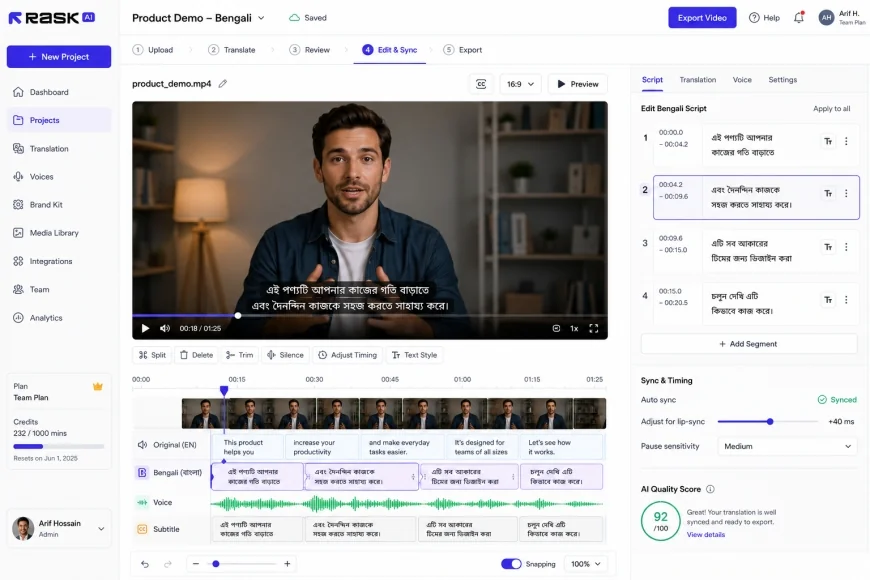 Rask AI provides an intuitive timeline interface that lets creators manually adjust translated Bengali text before finalizing the audio generation.
Deep Performance & Linguistic Accuracy
Where Rask AI stands out is its voice-cloning quality, which does a solid job of retaining the pitch and emotional undertones of the original speaker. However, the default translation model tends to favor a formal, standard West Bengal colloquial accent. While highly intelligible, this accent can sound overly academic or slightly out of place for central Bangladeshi audiences unless you jump in and manually adjust the phrasing to match local expressions.
Pricing, Licensing, & Target Group
As outlined on Rask AI, the system uses a strict credit-based pricing model where you pay per minute of processed video. Because high-fidelity voice cloning and lip-syncing consume credits quickly, it can become expensive for channels producing high volumes of long-form content. This makes the tool best suited for corporate training teams, commercial agencies, and high-budget creators who prioritize audio-visual realism over low costs.
2. Dubverse.ai
Dubverse.ai is built with a clear focus on the South Asian market. Because its underlying models are trained extensively on regional languages from India and neighboring countries, it offers highly localized tools for translating English video assets into natural-sounding Bengali.
Setup & Workflow Integration
Speed is the main focus here. After uploading your media file or importing via a link, you select whether you want subtitles, dubbing, or simple text-to-speech. If you choose dubbing, you are prompted to select an AI voice from a library categorized by age, gender, and regional tone. The automated transcription and translation tools then process the file, returning a localized cut in a few minutes.
Usability Metrics
The platform features a highly functional script editor. Editors can view the original text alongside the translation, complete with built-in pronunciation guides and contextual word suggestions. It is a highly responsive system, and processing times are impressively fast, often wrapping up in less than half the actual duration of the video.
Deep Performance & Linguistic Accuracy
Thanks to its focus on South Asian phonetics, the synthetic voices avoid many of the stiff, overly literal translations common in global platforms. The flow of standard Bengali is remarkably natural. However, the software still faces hurdles with distinct regional dialects. While standard West Bengal voices sound authentic, targeting specific regions in Bangladesh (like Sylhet or Chittagong) will require you to manually rewrite parts of the script to sound authentic.
Pricing, Licensing, & Target Group
According to the official plans on Dubverse.ai, the platform provides flexible, credit-based subscriptions alongside a basic free tier for testing. Their pricing is significantly more accessible for independent creators than enterprise-focused alternatives. It is a highly practical choice for YouTube educators, regional publishers, and indie filmmakers who need reliable voiceover tools without a steep price tag.
3. HeyGen
HeyGen is best known for its visual AI engineering, specifically its photorealistic avatars and video lip-sync capabilities. While most localization tools focus purely on sound, HeyGen attempts to solve the visual disconnect that occurs when a speaker's lip movements do not match the translated audio track.
Setup & Workflow Integration
The translation pipeline is part of HeyGen's broader video creation platform. You upload your video, set Bengali as the target language, and toggle the automatic lip-sync option. The platform translates the audio, generates a cloned version of the speaker’s voice, and then morphs the speaker's mouth frame-by-frame to align with the newly generated Bengali syllables.
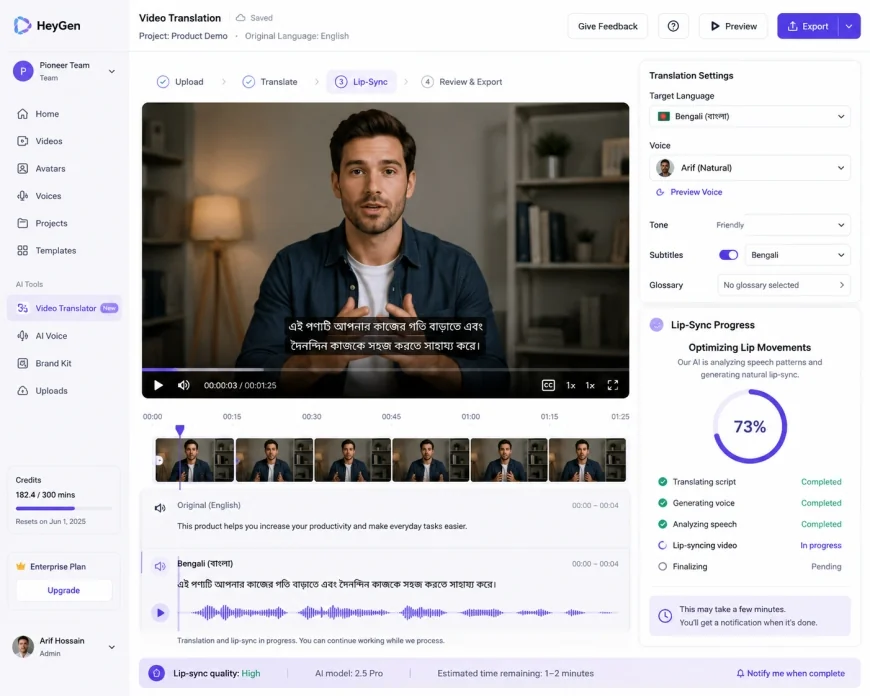 HeyGen leverages frame-by-frame visual morphing to match the speaker's lip movements with the generated Bengali audio track.
Usability Metrics
The user interface is polished and highly professional, though it comes with a slightly steeper learning curve. Because of the heavy visual processing involved, rendering speeds can be slow. A simple one-minute video with full lip-sync can easily take ten minutes or more to render, making it a bottleneck for rapid, high-volume production schedules.
Deep Performance & Linguistic Accuracy
The audio translation is clear and professional, but the visual lip-sync feature can occasionally trigger an "uncanny valley" effect during fast-paced colloquial dialogue. Because Bengali utilizes dental and retroflex consonantal movements that differ significantly from Western languages, the visual morphing algorithm sometimes struggles to keep up, leading to brief, unnatural-looking facial movements during fast-paced conversations.
Pricing, Licensing, & Target Group
As detailed on the HeyGen pricing page, this is a premium, credit-based service. The computing power required for frame-by-frame visual adjustments makes it one of the more expensive tools on the market. Consequently, it is best suited for corporate communications, localized commercials, and premium educational series where visual presentation is just as critical as the translation itself.
4. VEED.io
VEED.io takes a different approach by integrating translation features directly into a fully-featured, browser-based video editor. It is widely used by social media managers who need to output quick, captioned videos for platforms like TikTok, Instagram Reels, and YouTube Shorts.
Setup & Workflow Integration
Instead of acting as a standalone dubbing tool, translation in VEED.io is built right into the timeline. You upload your clip, head to the "Subtitles" or "Audio" tab, and choose the auto-translation tool. The software transcribes the audio, generates Bengali subtitles, and allows you to convert those captions into a synthesized voiceover. Having a full video editor on hand means you can crop, trim, and overlay graphics on your video in the same window.
Usability Metrics
For short-form creators, VEED.io offers excellent usability. The caption editor is highly intuitive, allowing you to style, animate, and position Bengali text with pixel-perfect control. Export speeds are fast, and the learning curve is minimal for anyone who has ever used basic editing software.
Deep Performance & Linguistic Accuracy
While VEED.io excels at generating and styling written Bengali subtitles, its audio dubbing is less sophisticated than dedicated localization engines. The synthetic voices can sound flat and robotic, lacking the emotional range and vocal nuances of the original speaker. Additionally, VEED.io does not support automated lip-syncing, so the speaker's mouth movements will remain in the original source language.
Pricing, Licensing, & Target Group
According to the details on VEED.io, the service operates on a subscription-based model with varying monthly translation limits. This predictable pricing makes it incredibly cost-effective for social media marketers and content teams who prioritize rapid editing and eye-catching subtitles over perfect voice cloning.
💡 Expert Analysis & Experience
Observation: Across various localization workflows, we see a recurring pattern. When translating technical, legal, or specialized business content from English to Bengali, automated engines almost always try to translate industry jargon literally. This results in phrasing that sounds incredibly strange to a native speaker.
Result: To get a professional result, editors should always use platforms that offer a side-by-side transcript editor (like Rask AI or Dubverse.ai). A native speaker must review the text draft, replace awkward, literal translations with natural terms, and only then hit the generate button. Skipping this step almost always leads to poor audience retention.
Direct Comparison & Capability Matrix
| Feature / Metric | Rask AI | Dubverse.ai | HeyGen | VEED.io |
|---|---|---|---|---|
| Primary Strength | Voice cloning & multi-speaker tracks | South Asian language focus & fast turnaround | Visual lip-syncing & virtual avatars | All-in-one editor & stylized captioning |
| Dialect Flexibility | Moderate (Defaults to standard West Bengal) | High (Good selection of regional accents) | Moderate (Slightly formal delivery) | Basic (Standard spoken Bengali) |
| Lip-Sync Capability | Yes (Automated audio-to-video alignment) | No (Audio-only dubbing) | Yes (Advanced frame-by-frame morphing) | No (Audio-only dubbing) |
| Processing Speed | Fast (Approx. 1:1 ratio to video length) | Very Fast (Often faster than real-time) | Slow (Heavy visual rendering demands) | Fast (Cloud-optimized editor) |
| Pricing Structure | Credit-based, premium tiers | Credit-based, budget-friendly | Credit-based, high premium | Subscription-based with translation minutes |
Practical Scenario
Consider an educational channel with a library of 10-minute physics tutorials in English that needs to be localized for secondary school students in Bangladesh.
Using HeyGen will give you incredible visual lip-syncing, but localizing a 50-video library this way will burn through credits rapidly, making it financially impractical. With VEED.io, the process is quick and affordable, but the flatter, robotic voices might make it hard for students to stay focused during complex lessons.
In this scenario, Dubverse.ai or Rask AI represent the most sensible choices. Their side-by-side script editors allow you to manually adjust rigid translations to match the terminology actually used in Bangladeshi classrooms, generating realistic, engaging voices at a manageable price point.
✅ Pro Tip
When dubbing video content, always mix in a separate background music track. When AI localization systems isolate the original speech to replace it with translated audio, they often strip out or muffle the background sound, leaving the final video feeling cold and sterile. For a professional output, import your original instrumental track and mix it back in at a low volume under the new Bengali voice track.
Crucial Roadblocks: Who Should Avoid These Tools?
Despite the rapid progress of automated dubbing, these platforms are not a universal fix. You should avoid relying entirely on automated video translation if you fall into any of the following categories:
- Highly Nuanced Creative Narrative Producers: If your video relies on complex wordplay, poetic metaphors, or intense emotional performances (such as indie dramas or comedy sketches), automated models will fail to capture the subtext. You will end up spending more time correcting the script than you would simply hiring a native voice actor.
- Creators with Strict, Fixed Budgets: Most premium platforms run on credit-based billing. A common frustration is the steep pricing jump upon renewal or the high cost of buying extra credits if you run over your monthly limit mid-project. If you cannot tolerate unpredictable software expenses, standard manual translation services are a safer bet.
- Fast-Turnaround News Teams: While processing speeds are improving, rendering complex video-to-video lip-syncing (like on HeyGen) is still a slow bottleneck. If you need to break news in minutes, waiting on a rendering queue can seriously disrupt your workflow.
Pricing & Licensing Breakdown
Before integrating these localization tools into your production pipeline, it is vital to understand how their pricing and licensing structures work. Because voice synthesis and video rendering require significant cloud GPU resources, almost all of these services charge by the minute using credit-based monetization. This means every second of processed footage directly impacts your monthly operating costs.
For a channel publishing consistent content, these costs can add up fast. For instance, dubbing a 20-minute video daily translates to 600 minutes of content every month. On high-end platforms like Rask AI or HeyGen, this volume can easily push your monthly software bill into hundreds of dollars. Editors must carefully weigh the visual benefit of advanced features like lip-syncing against the raw financial sustainability of their project.
Additionally, pay close attention to commercial licensing rights. If you are translating promotional campaigns, monetized YouTube videos, or corporate assets, make sure your subscription tier explicitly grants commercial use rights for the synthesized voices. While platforms like Dubverse.ai and Rask AI provide commercial rights on paid tiers, using free trial outputs for commercial purposes is almost always a violation of their licensing terms.
Balanced Comparison
Platform Strengths
- Rask AI: Excellent voice cloning that captures the unique cadence and emotional tone of the speaker.
- Dubverse.ai: Cost-effective regional plans with models optimized for South Asian languages.
- HeyGen: Unmatched visual lip-sync capabilities that keep video and audio aligned.
- VEED.io: A versatile, user-friendly editor with robust subtitle styling and templates.
Platform Limitations
- Rask AI: Expensive credit-based plans that can scale out of reach for high-volume creators.
- Dubverse.ai: Lacks visual lip-syncing features, meaning mouth movements will remain in the source language.
- HeyGen: Slow rendering times and potential visual artifacts during rapid, expressive speeches.
- VEED.io: Synthetic voices sound more robotic and flat compared to dedicated voice-cloning engines.
Who should use what?
To help you narrow down your options, here is a quick breakdown based on specific production needs:
- Corporate Communications & High-End Ads: Go with HeyGen. When professional visual execution and realistic lip-syncing are mandatory, the longer render times and premium pricing are worth the investment.
- Independent YouTubers & Educators: Go with Dubverse.ai. Its combination of regional voices, intuitive side-by-side editing, and accessible pricing is highly practical for growing channels.
- Professional Localization Agencies: Go with Rask AI. Its multi-speaker tracking and high-fidelity voice cloning make it the standard for high-accuracy localization projects.
- Social Media Managers & Short-Form Editors: Go with VEED.io. If you are producing multiple TikToks, Reels, or Shorts every day, VEED’s quick rendering and subtitle styles are incredibly efficient.
Recommended Choices by Purpose
There is no one-size-fits-all solution when it comes to localization. If your absolute priority is visual accuracy and your budget can handle high credit costs, HeyGen is the most technologically impressive choice on the market. However, if you are looking for scalability and cost-efficiency for longer videos, Dubverse.ai offers the most practical and culturally natural voice-dubbing features for South Asian audiences. For those who want exceptional voice cloning and don't mind doing some manual script adjustments, Rask AI remains a premium, highly reliable option.
Common Questions
How accurate is voice cloning for the Bengali language?
Voice-cloning technology has improved dramatically, capturing vocal details, tone, and delivery style with impressive accuracy. However, any background noise in the original clip can affect the cloned output, sometimes leading to metallic-sounding artifacts in the synthesized Bengali voice.
Do these platforms support regional Bengali dialects?
Most tools default to standard colloquial Bengali (usually West Bengal standard). While they can translate regional variations, they do not automatically adapt to specific local dialects like Chittagonian or Sylheti. For these, editors must manually adjust the translated script using the platform's editor to reflect local terms before generating the final audio track.